
How to filter out price shoppers and tire-kickers before they call.
You'll never stop every low-baller. But your website can answer the questions that send them elsewhere, and help the right customers feel sure about you.

By Franklin Nwangene, co-founder of ConversionArk
November 14, 2026 · 4 min read
You know the call. "How much to…?" You give a number, and they're gone. Or you drive out, quote the job properly, and they go with someone else. As one owner who's bought plenty of leads put it, "they end up going with Chuck in a Truck because he was $100 cheaper."
Some people are just shopping, and that's their right. You won't win them all, and you shouldn't try. The goal isn't fewer calls. It's fewer wasted ones.
Why your website might be attracting them
A website can pull in the wrong calls without anyone meaning it to:
Six things your website can say to filter them out
None of these turn people away rudely. They just answer questions up front, so the right customers move closer and the wrong ones move on before they call:
What not to do
A few common fixes backfire:
When filtering isn't the problem
If your phone barely rings at all, filtering makes things worse. Start with being found and with answering when you can't pick up, then tune who calls.
And if most of your price shoppers come from shared leads you pay for, the issue may be the source, not your website. A lead sold to several companies at once tends to go to whoever answers first or quotes lowest.
A check you can run tonight
Open your website on your phone, the way a customer would at 9pm, and look for four things:
Can I tell roughly what this costs, or how the price is worked out?
Can I tell which towns you cover, and what you don't do?
Can I see who's coming?
Can I leave my name and number, or book a time, without calling?
If any answer is no, that's your first fix. It's also part of what we call the 9pm Test: a site that answers, takes the name and number, and books.
Want a site that answers the price question for you?
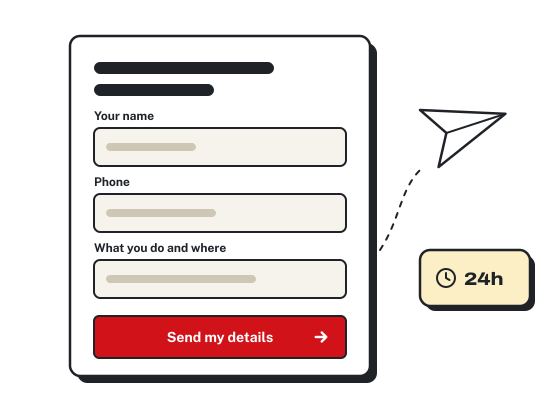
Every site we build has to pass the 9pm Test before you see it. One 5-minute call, and you'll see your own site working on your phone within 24 hours, guaranteed.
A 5-minute call with Franky, our AI Virtual Receptionist, starts your preview. First preview guaranteed within 24 hours, and Taylor and Franklin follow up personally.
Already have a website?